
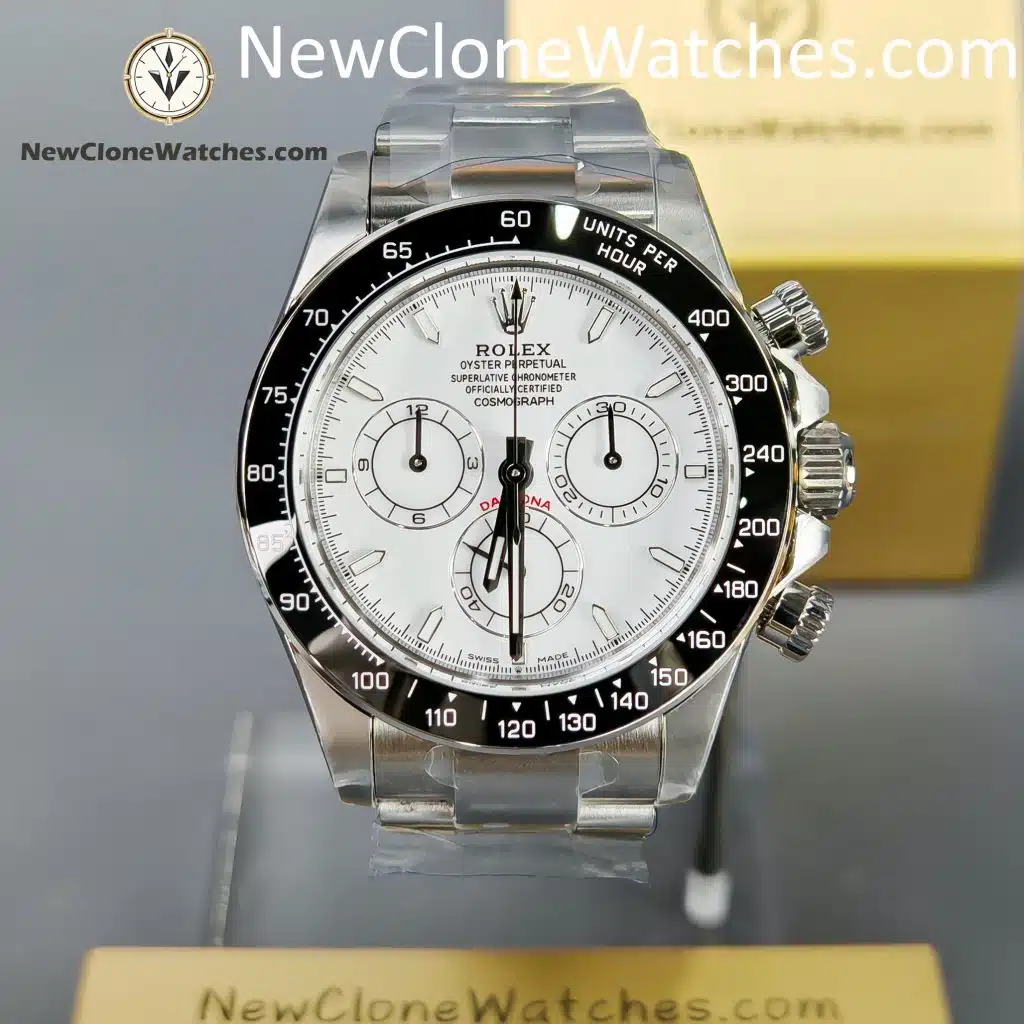
Why Buy Super Clone Watches Instead of Luxury Originals
“Luxury is not about who the brand deems worthy — it is about the discernment of the collector.”
The Broken Luxury System
Before understanding why discerning collectors choose super clone watches, it helps to look at the dysfunction that defines today’s luxury watch market. Three patterns stand out.
The Myth of Scarcity
Brands restrict supply to manufacture demand. Even with the money in hand, acquiring a Daytona through authorised channels is a privilege, not a purchase — the market is no longer about affordability, but about who the brand deems worthy.
The Purchase-History Trap
Want a Patek Nautilus? First buy several other pieces you have no interest in. This allocation model turns collecting into a game of obligation — the collector no longer simply purchases.
The Gray-Market Premium
Flippers routinely sell allocated models at three to four times retail. A standard luxury watch has become a speculative asset — less about horology than arbitrage, with the collector paying for it.

A Rational Choice for the Modern Collector
The question of why to buy super clone watches is, at heart, one of honesty. When what’s sold is not the watch but the brand’s mythology, the rational collector is entitled to opt out — and the engineering argument stands on its own.
-
I
Identical Mechanical Construction
Each 1:1 super clone watch is built with a genuine calibre-matched movement. Wearing, winding, and reading the piece is mechanically the same as the authorised reference — the sapphire caseback reveals the same finishing, the same rhodium-plated bridges, the same decorated rotor.
-
II
No Waitlists, No Allocation Games
Acquire the exact piece you want today — without cultivating a purchase history, enduring a boutique relationship, or being deemed a worthy client. The collector keeps full say over their own collection.
-
III
Transparent, Engineering-Based Pricing
Each piece is priced for its material and mechanical content — solid 904L steel, double-domed sapphire crystal, precision movement. None of the figure reflects global marketing, boutique real estate, or celebrity endorsement.
Who Chooses a Super Clone?
The choice to buy a 1:1 super clone watch is rarely about being unable to afford the original. More often, it is a considered rejection of a market that has stopped serving the collector. Three profiles define this community.
The Pragmatic Enthusiast
Real horological knowledge, and real responsibilities — a family, investments, long-term obligations. He won’t trade his household’s stability for a depreciating piece of branded steel, and chooses the 1:1 super clone as value over mythology.
The Rational Collector
Rather than locking capital into a single safe-queen, he curates a dynamic collection of elite references — rotating by occasion, attire, and mood, not by portfolio. His collection reflects taste, not net worth.
The Wealthy Strategist
He owns the genuine reference, but wears the 1:1 super clone for travel, higher-risk settings, or high-contact occasions. He attends the gala in the clone; the original stays in the vault. Sensible risk management, applied to horology.